
Prolific researcher and expert statistician.
“Through my personal research agenda and my consulting work, I provide integral insights that can be used to make informed, impactful decisions, and promote progress.”
— Dr. Ashley Thompson
Academic Research
The primary research focus of the Sexuality and Relationship Science Lab (SARS) is to understand people’s attitudes, judgments, and motives related to sexuality, intimacy, and romantic relationships. In doing so, members of the SARS team hope to reduce sexual and relationship inequities/stigma, improve sexual/reproductive health knowledge transfer, and promote safe and healthy sexual relationships. This is often done by applying social and cognitive psychological theories and testing them experimentally using sophisticated quantitative techniques.
Quantistat Solutions Consulting
At Quantistat Solutions, we are dedicated to helping individuals, organizations, and institutions understand the dynamics of human behavior through advanced research and statistical techniques. With a specialized focus on social behavior and well-being, our mission is to provide evidence-based, data-driven solutions to healthcare providers, researchers, and organizations seeking to improve health outcomes and understand the behavioral dynamics that influence well-being and decision-making.

Ashley Thompson, PhD
Dr. Ashley Thompson is the director of the Sexuality and Relationship Science (SARS) Lab and is currently an Associate Professor in the Department of Psychology at the University of Minnesota Duluth. Dr. Thompson’s academic research program is designed to reduce sexual and relationship inequities/stigma and improve sexual/reproductive health knowledge transfer by applying complex and sophisticated research and statistical methodologies.
Dr. Thompson also has a passion for applied research in social and organizational settings. Consequently, Dr. Thompson has supported research projects with numerous clients, including the Dalhousie Family Medicine Research Unit, the Center for Disease Control (on their Hear Her campaign), Memory Keepers Medical Discovery Team, Ethnifacts (A Research, Insights, and Strategic Guidance Firm), and the Minnesota Sex Offender Program.
View my approach to advance Sexual Health Education below.
SEEK: Connecting (Sexuality) (Education) (Evaluation) (Knowledge)
An Innovative Approach to Advance Sexual Health Education

My broader work examines how social cognition, stigma, and interpersonal, educational, and institutional contexts shape sexuality, relationships, and health. Its interconnected lines address sexual knowledge and education; sexual interest and arousal; stigma surrounding gender, sexual, and relationship diversity; intimacy, relationship functioning; violations of relationship agreements; and the translation of sexuality research into clinical, public-health, and community settings. SEEK treats sexual knowledge as a belief system and as a social practice all at once.
SEEK focuses on how people acquire, discuss, and apply sexual knowledge. This approach examines beliefs about sexual knowledge that influence willingness to learn and communicate about sexuality, considers academic environments that shape faculty and students with gender and sexual minority identities, and examines how sexual-health education and professional training are designed, delivered, evaluated, and applied.
Advancing Sexual Health Education with SEEK
Teaching through SEEK
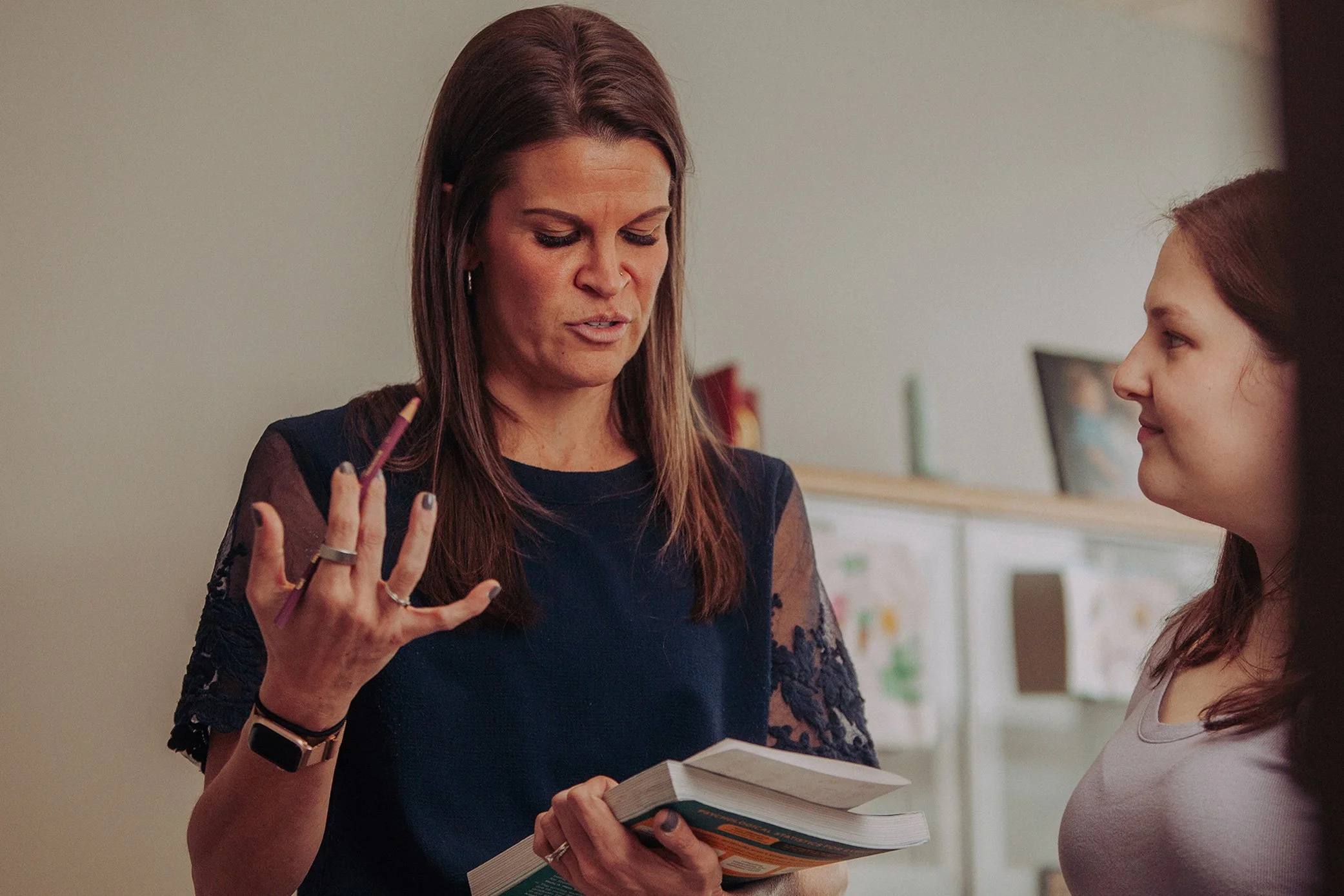
SEEK guides how I design, deliver, and evaluate sexual-health education across undergraduate, graduate, and professional training settings. For example, I have taught 14 undergraduate and graduate human sexuality courses across three institutions and am currently completing AASECT sexuality educator certification under the supervision of Michael Gendernalik. At my current institution (UMD), I developed and taught Advanced Topics in the Psychology of Human Sexuality, a 5000-level course for master’s students. I also created and led Bounded Sex? Gender and Sexuality in and Beyond European Borders, an intensive study-abroad course in Berlin and Prague examining the development of sexual science, its disruption through Nazi persecution and the Holocaust, and what that history means for sexuality research and advocacy today. I have also supported sexual-health curriculum and taught first-year students at the University of Minnesota Medical School’s Duluth campus.
Leading through SEEK
SEEK informs my approach to educational leadership, guiding how I strengthen academic programs, expand access, and respond to students’ needs. As interim head of Social Work, I led curriculum and program planning across the BSW and MSW programs, revising course schedules to meet changing university policies while honoring commitments to flexible scheduling for nontraditional and Indigenous students. I helped faculty revise an existing course entitled Race, Class, and Gender to be included as a new liberal education requirement and led strategic planning as the department revisited its mission and vision following the early retirement of several Indigenous faculty. During UMD’s Academic Program Array Analysis, I used accreditation requirements, student–faculty ratios, and faculty contact hours to advocate for and secure two new faculty hires. I also procured university funding for a college-wide retention initiative housed in Social Work and hired an Elder-in-Residence to support students across the college, particularly Indigenous students. I continue this work on access as Associate Director of Graduate Training (ADGT) in Psychology through which one of my first accomplishments was working across University of Minnesota campuses to secure access to ISGH courses for UMD master’s students pursuing sexuality-related certificates.

Analysis through SEEK
SEEK guides how I use research and evaluation to identify needs, inform programs and practices, and assess their impact across educational, clinical, and community settings. As research director for UWO’s campus climate assessment, I designed and administered a survey, analyzed the findings, and developed workshops and brown bags in response to concerns raised by faculty, staff, and students with gender and sexual minority identities. At the ADGT, I am contributing to a self-study connected to the external review of our graduate psychology program. Perhaps most exciting, recently the provost and my associate dean selected me as Faculty Fellow for Student Research Experiences in recognition of my commitment to undergraduate research and my record of disseminating research involving undergraduate students. Through the NIH-funded BRE-SPAD initiative, which supports research capacity at resource-limited institutions, I lead undergraduate research efforts across our college, administer funding for faculty developing course-based research experiences, and evaluate student outcomes. These experiences inform how I would expand access, support faculty, and assess educational outcomes through SEEK if offered the position at ISGH.
SEEK applied to Clinical and Professional Practice
My work in evaluation and knowledge translation is informed by my work with clinical, public health, and community partners. Since 2024, I have served as a research consultant to the Minnesota Sex Offender Program, collaborating with clinicians, administrators, and researchers to use existing data more effectively and develop studies responsive to treatment and assessment needs. This partnership has produced research examining sexual interest and arousal among men who are civilly committed, including a recent article in Archives of Sexual Behavior. Using a separate sample of men in the program, I also participate in a multi-state collaboration examining clients’ experiences with eye movement desensitization and reprocessing as a supplement to cognitive behavioral sex-offense treatment. Recently, I presented at the 2026 Association for the Treatment and Prevention of Sexual Abuse conference. This work reflects my commitment to centering client perspectives and using research to strengthen professional practice.
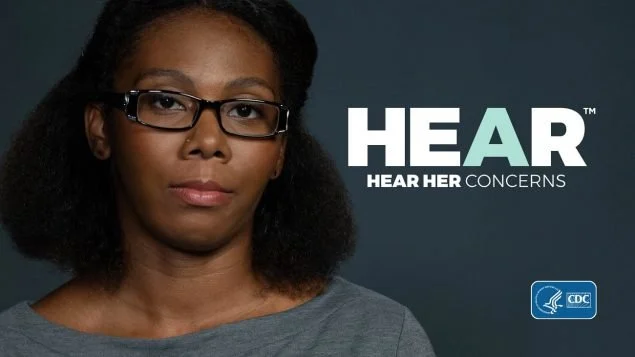
I have taken a similar approach in other health and community settings. As a consultant to the CDC’s Hear Her® campaign, I contributed to a mixed-method evaluation of its maternal warning-sign messaging and worked with stakeholders to recommend changes to the campaign. At Dalhousie University’s Family Medical Research Unit, I supported the unit’s research and advised medical residents on their projects. I have also collaborated with the University of Wisconsin Oshkosh’s Nursing Department on research concerning professional values and with the Fox Valley Memory Project on an intervention for family members seeking better ways to communicate with loved ones living with dementia. Across these partnerships, I have worked with people close to the setting and the problem to turn research into guidance they can use.
SEEK sustained through Funding and Partnership
My research and service have drawn support from institutional, professional society, and foundation sources, often through collaborations that I build on through SEEK. Most recently, a colleague and I received pilot funding to develop and validate a measure of implicit theories of sexual attraction, including beliefs about the malleability of paraphilic interests. This project examines whether these beliefs shape attitudes toward minor-attracted individuals, including perceptions of treatment effectiveness and help-seeking and judgments of responsibility and blame. This past spring, I also received a small grant from the Society for the Teaching of Psychology to examine undergraduate students’ perceptions of higher education human sexuality courses. Additionally, earlier in my career, I secured support from the Wisconsin HOPE Lab for an annual counseling impact assessment that I directed. Finally, in 2017, I served as a consultant on a Diverse Intelligences grant funded by the Templeton World Charity Foundation examining stereotype threat and sex and gender differences in cognitive performance.
Currently, I am building on this foundation through larger collaborative proposals. I am a co-investigator on a $499,752 NSF proposal under review in collaboration with the University of Minnesota Medical School’s Memory Keepers unit. If funded, the project will develop a culturally grounded measure of successful aging among Alaska Native adults that can inform the design and evaluation of interventions aligned with community-identified priorities. I am also developing an NIH proposal with a colleague in Social Work to examine treatment needs and responsivity factors within sex offender civil commitment programs, assess how programs apply the Risk-Needs-Responsivity framework, and create a service-delivery toolkit. Together, these projects position SEEK as a growing, externally supported program connecting measurement and theory with educational, clinical, and community needs
SEEK extending into Communities
My community partnerships also extend beyond the university through partnerships that make sexual-health knowledge more accessible to communities. As a board member of Honest Sex Ed Minnesota, I am working with founder Meg Bartlett to develop a funding proposal to improve the quality and consistency of sexuality education in rural Minnesota, particularly in northern communities. The proposed project will identify educational gaps and support implementation and evaluation of the organization’s framework, with particular attention to northern Minnesotan communities. I also lead undergraduate and graduate student volunteers in creating short, research-based publications, or “zines,” for the Honest Sex Ed website. This initiative gives students experience translating research into accessible public resources while expanding the reach of reliable sexual-health information.

My commitment to public education has been a consistent part of my career. In my local community, I previously partnered with Planned Parenthood to develop and host Pleasure, Bodies, and Justice (PB&J), a community speaker series designed to make sexual-health knowledge accessible, engaging, and enjoyable. Earlier in my career, I produced and hosted Turning It On: Your Guide to Love, Sex, and Relationships, a television program in Eastern Canada designed to make sexuality and relationship information accessible to a public audience. These experiences reflect my belief that effective sexual-health education must be scientifically grounded, responsive to community priorities, and accessible beyond traditional academic settings.